Search articles in Diversity Resources
Filter Articles
Found 184 articles
Getting the most from all physician leaders
- Mar 26, 2021
During a four-decade career in the Army, I trained for and practiced the art of leadership while commanding at various levels. It was a rewarding career, filled with interesting people, a variety of cultures, and dynamic challenges.
Create the life in medicine that works for you
- Mar 26, 2021
Nearly 40% of female physicians cut back clinically or leave medicine entirely within their first five years of finishing training (Paturel, 2019). This statistic is staggering and poses real policy issues when considering the worsening physician shortage, particularly now that women comprise a little more than half of currently enrolled medical students.
Follow this roadmap to set up your private practice
- Mar 26, 2021
The world of medicine continues to change. In a 2018 American Medical Association (AMA) survey, 47.4% of the physicians were employed by various health organizations, while 45.9% owned their own practice. Ten percent of physicians were employed by physicians owned practices. Overall, 54% of physicians worked in a practice owned by physicians (AMA, 2019).
Coronavirus: Calling on women in medicine to lead in place
- Mar 26, 2021
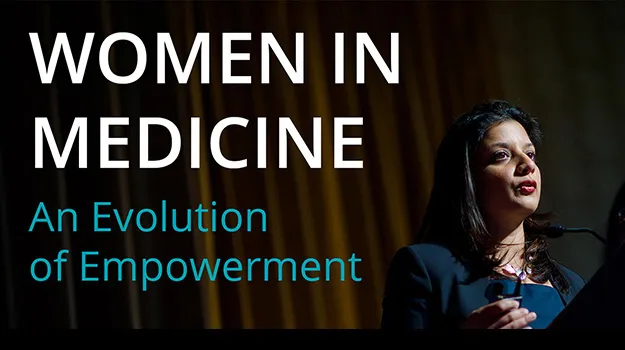
At the 2019 Women in Medicine (WIM) Summit held in Chicago, I delivered a breakout session encouraging women physicians to expand their leadership skills by actively participating in professional organizations that may not be traditional to their respective areas of specialty. The goal of my presentation was to argue that networking within your specialty (medicine) with colleagues that are similar to you, your goals, career trajectories, will not be enough as you move through your career.
-
Understand the basics of trust for leadership success
- Mar 26, 2021
We know that individuals with strong trusting relationships live longer, healthier lives, and have a greater sense of fulfillment and peace. Professional environments with high levels of trust have greater employee satisfaction, lower rates of turnover, and in the clinical setting, demonstrate better clinical outcomes and higher levels of teamwork.
A surgeon’s approach to ergonomic modifications in the OR
- Mar 26, 2021
The challenges female surgeons experience with using surgical instruments that have historically been designed for use by male surgeons with taller, stronger physiques — and often larger-sized hands — have been well documented (Sutton, et al, 2014).
Follow these 5 steps to develop a mentoring team
- Mar 26, 2021
Those who are mentored outperform and out earn those who are not (Eby, et al, 2008). They get promoted more often and report lower burnout rates. However, having just one mentor is limiting. Having a team of mentors puts you in charge of your future.
Become active in organized medicine to impact change
- Mar 26, 2021
If you’re like me, you’re probably frustrated by the dysfunction in our health care system. This pandemic magnifies and brings into focus how leadership has failed to enact health care policy that serves us, our colleagues, and our patients — particularly those who are most vulnerable.
Advance the mission of your women’s leadership committee
- Mar 26, 2021
Women’s leadership groups are key to cultivating female leaders in our profession. But, what if your group could also serve a vital role in promoting women’s equity efforts and participate as a strategic partner to your institutional leadership?
Why women physicians need to be involved in politics
- Mar 26, 2021
We’re at an interesting point in American history. One hundred years after women finally won the right to vote, there are 126 women in Congress, 90 in statewide offices (including nine governors), and 2,152 female state legislators. And come January 2021, we could have our very first female vice president.
Support women medical professionals by teaching advocacy skills
- Mar 26, 2021
Being young and female is often not a powerful combination. A young woman will frequently have her authority questioned and will struggle to be heard. What’s more, the undertone of comments can do extreme damage to self-esteem, goals, and ambitions.
Create community by starting a Women in Medicine and Science group
- Mar 26, 2021
The menu was simple: French toast, quiche, and fresh fruit. The small group of women faculty and residents were at the home of Vidhya Prakash, an Infectious Diseases physician at Southern Illinois University (SIU) School of Medicine and they didn’t know what to expect.
Black women making strides and striving for more
- Mar 26, 2021
As the 119th President of the National Medical Association (NMA), I am the thirteenth woman to hold this position in the organization’s 124-year history. Also, I’ve been the third woman to hold this position in four years. NMA was founded because African American physicians were not allowed to join the AMA. We are the collective force for African American physicians for parity, justice and medicine.
Engage men as allies to create gender equity in health care
- Mar 26, 2021
Women are at a disadvantage in the workplace. They deal with unequal pay, sexual harassment, lack of credit for their contributions, and more. And while organizations are looking to address these issues, too many gender-inclusion initiatives focus exclusively on how women should respond, leaving men out of the equation. Such efforts reinforce the perception that these are women's issues and that men — often occupying crucial leadership roles in most organizations — don’t need to be involved.
Overcoming gender and affinity biases in the medical profession
- Mar 26, 2021
The medical profession is predominately led by men and operates in accordance with masculine norms, values, and expectations. As a result, although half of all U.S. medical school students are women, only 16% of deans, 18% of department chairs, and 25% of full professors in those schools are women (Paturel, 2019). Women are only 18% of hospital CEOs, 10% of senior authors on peer-reviewed medical papers, and 7% of editors-in-chief at prestigious medical journals (Mangurian, et al, 2018).
Implicit bias in medicine: Individual-level interventions may disempower vs. empower
- Mar 26, 2021
For more than two decades, institutions seeking to address gender and other inequities have used the concept of implicit bias (IB) and implicit association testing (IAT) to welcome more diversity in their ranks (FitzGerald, et al, 2019).
Find your leadership style, communicate it well
- Mar 26, 2021
“I’m the doctor, of course I’m the leader!“ Who hasn’t heard that comment — or even thought it personally? The truth is we all have a leadership style even if we’ve never thought about it.
Hack your brain to let the leader in you emerge
- Mar 26, 2021
Efforts to promote gender equity in medicine focus on training women in leadership and assertiveness skills. Once that inspiring conference ends and women return to the workplace, many of them experience a stress response and feel too uncomfortable to use the techniques they’ve learned.